Ski 3D Layered Lasercut Embroidery Review
When I sit down to evaluate a new machine embroidery design, I am rarely looking for something that simply "looks cute." I am looking for viability. Will it stitch cleanly? Will it hold up after twenty washes? And most importantly, will it add enough perceived value to justify the time and labor required to produce it? Today, I am putting Ski 3D Layered Lasercut through its paces from the perspective of a professional designer preparing for a commercial run.
The concept here is interesting because it bridges two distinct aesthetic worlds: the crisp, geometric precision of laser cutting and the soft, tactile warmth of handcrafted textiles. As a piece categorized under wall decor but designed as an embroidery file, it presents a unique challenge. It promises depth and dimension that flat stitching often struggles to achieve. But does it deliver in practice? Let us look at how this design behaves on the hoop and what kind of finished product it truly serves.
First Impressions and Visual Personality
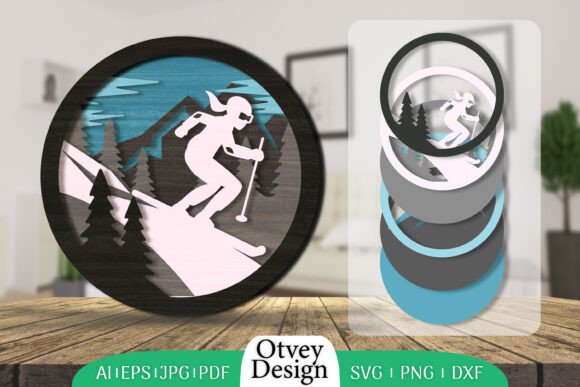
The moment you open the digital assets, the visual personality of Ski 3D Layered Lasercut is immediately apparent. It does not rely on complex, chaotic patterns to grab attention. Instead, it uses negative space and layered geometry to create a sense of movement. The "lasercut" effect suggests sharp edges and clean lines, which translates beautifully into satin stitch work where thread tension is critical.
In terms of mood, this design feels modern, minimalist, yet cozy. It avoids the cliché of overly busy winter scenes. For a designer, this clarity is a gift. It means fewer tangles, clearer definition, and a more sophisticated final look. It feels like a design that belongs in a curated boutique rather than a mass-produced discount store. The layered aspect implies that the design likely utilizes multiple colors or perhaps even applique techniques to build that three-dimensional feel. This adds a premium touch to any handmade product.
Real-World Application: From Hoop to Product
I recently tested this concept with a specific project in mind: a line of custom tote bag designs for a holiday pop-up market. The goal was to create a personalized gift that felt substantial and high-end. Here is how Ski 3D Layered Lasercut performed in that scenario.
On a canvas tote, the design stood out because of its structural integrity. Unlike fill stitches that can sometimes look muddy on thick fabrics, the defined layers of this design maintained their shape. The contrast between the thread and the fabric texture became a focal point rather than a distraction. Customers at the craft fair gravitated toward items that looked professionally executed, and this design delivered that polish. It transformed a simple tote into a statement piece.
However, the versatility extends far beyond bags. I also envisioned this working exceptionally well as sweatshirt embroidery. Placed over the heart or centered on the back, the geometric ski motif offers a contemporary take on seasonal apparel. It works equally well as baby embroidery for nursery wall hangings or onesies, where the clean lines are easier for small hands to appreciate without being overwhelming. For apron embroidery in a kitchen setting, it adds a touch of rustic elegance that fits perfectly with wooden utensils and linen towels.
Technical Considerations and Stitch Behavior
As an experienced reviewer, I must address the technical realities of executing a design that mimics laser cutting. The illusion of precision requires precise execution. When digitizing or using pre-made files for this type of artwork, stitch density becomes your primary concern.
If the density is too low, the "layers" may separate or look sparse, breaking the illusion of a solid lasercut shape. If it is too high, the fabric may pucker, especially on thinner materials. I strongly advise checking the stitch count and ensuring the hoop size accommodates the full scope of the design without unnecessary trimming. You want every curve and angle to be represented faithfully.
Another critical factor is the choice of thread colors. Because the design relies on layering, color contrast is essential. A monochromatic scheme might look elegant but could lose definition if the shades are too close. I recommend testing different palettes. A deep navy on white cotton will make the shapes pop, while a cream thread on beige linen will offer a subtler, tonal luxury. Always inspect small details closely; if there are tiny connecting threads meant to hold layers together, ensure they are sturdy enough to survive the washing machine.
Where Caution Is Required
No design is perfect for every surface. While Ski 3D Layered Lasercut is versatile, there are specific scenarios where you should proceed with caution.
- Small Hoop Sizes: If the design is large relative to your hoop, you risk distorting the fabric during re-hooping. Ensure the design fits comfortably within your machine’s capabilities.
- Textured or Stretchy Fabrics: Knits and heavily textured weaves can hide the fine details of the lasercut effect. On stretchy fabrics, improper stabilizer usage can lead to warping, ruining the geometric accuracy.
- Dense Stitch Areas: Avoid placing this design on areas of garments that undergo frequent friction, such as the cuff of a sweatshirt or the bottom hem of a tote bag. High-density embroidery wears faster in these zones.
- Curved Surfaces: Attempting to embroider this on a curved cap front requires advanced technique. The flat, architectural nature of the design may not conform well to the curvature of a hat without significant distortion.
Commercial Viability and Branding
For Etsy sellers and small shop owners, the commercial potential of this design lies in its adaptability. It is not tied to a single niche. It can serve as a holiday embroidery item in December, transition into general winter wear, and even serve as year-round wall decor when mounted properly.
Creating printable mockups of this design on various backgrounds—such as shiplap walls, dark wood tables, or neutral linens—can significantly boost buyer engagement. The clean lines photograph well, which is crucial for online sales. When customers see a high-quality image of the finished product, trust increases. They perceive the item as a premium digital embroidery file or a high-value physical good.
Furthermore, the design supports brand consistency. If your shop focuses on modern, minimalist aesthetics, this design aligns perfectly. It signals to your audience that you pay attention to detail and current trends. It elevates your craft business from selling commodities to selling art.
Practical Designer Notes Before You Stitch
Before committing to a full production run, follow these steps to ensure success:
- Test on Scrap Fabric: Always run a test stitch-out on the exact fabric you plan to use. This reveals issues with thread tension or stabilizer choice early.
- Check Black and White Mockups: Convert your design preview to grayscale. This helps you assess the balance of light and dark elements without the distraction of color.
- Verify Licensing: Confirm whether the file allows for commercial use. Selling finished items requires clear rights, whereas personal use may have different restrictions.
- Inspect Small Details: Zoom in on the digital file. Are there tiny gaps that might tear? Are the corners sharp? If the digitization is poor, no amount of skilled sewing will fix it.
- Select Proper Stabilizer: Use a cut-away stabilizer for woven fabrics to prevent shifting, and a tear-away for stable knits, depending on the design's requirements.
In conclusion, Ski 3D Layered Lasercut is a strong contender for designers seeking to blend modern graphic trends with traditional craftsmanship. It offers a sophisticated look that appeals to a wide range of buyers, from those buying custom apparel to those seeking unique home decor. By paying attention to stitch density, fabric choice, and proper stabilization, you can transform this digital asset into a standout finished product that commands respect and price in the marketplace.