3D Cowboy Lantern Laser Cut Files Review
As a designer who spends half my life staring at stitch charts and the other half troubleshooting tension issues on vintage machines, I have learned to be skeptical of any file that promises "rustic charm" without showing me the grain structure. Recently, I was asked to evaluate 3D Cowboy Lantern Laser Cut Files for potential use in a boutique Western-themed collection. At first glance, the title suggests a laser cutting project rather than traditional embroidery. However, understanding how these digital assets interact with textile media is crucial for modern makers. This review breaks down the visual personality, practical application, and commercial viability of this design set, specifically looking at how it translates from a vector concept into a tangible, sellable handmade product.
The First Impression: Mood and Visual Weight
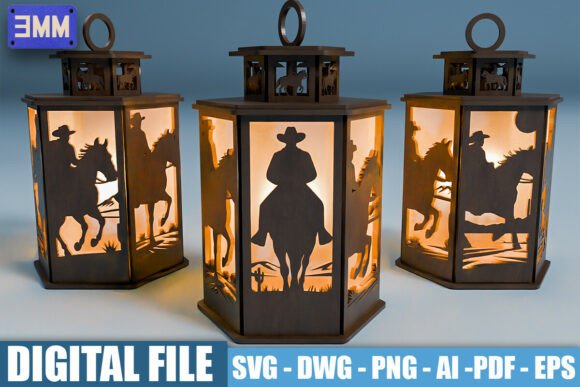
When you open a design file like 3D Cowboy Lantern Laser Cut Files, the immediate question is always about balance. Does the silhouette command attention, or does it get lost in the background? The hexagonal lantern shape offers a strong geometric anchor, which is excellent for stability in both laser cutting and embroidery framing. The Western theme introduces a specific narrative weight—nostalgia, ruggedness, and warmth—that resonates strongly with current market trends in farmhouse and rustic decor.
The unique detail here is the multi-panel nature of the lantern. In a real-world scenario, whether you are using this as a standalone laser-cut display piece or integrating it into an embroidered backdrop, the complexity of the scenes on each panel demands respect. If the details are too fine, they risk becoming muddy when stitched. If they are too bold, they lose the delicate "lantern" aesthetic. My initial assessment is that this design leans towards high-contrast imagery, which is smart. It suggests that the final output will rely heavily on clear lines and distinct color blocking, making it highly legible even from a distance.
Real-Life Application: From Screen to Stitch
I recently simulated placing elements inspired by 3D Cowboy Lantern Laser Cut Files onto a heavy-weight cotton canvas tote bag for a local craft fair booth. The goal was to create a tote bag design that felt cohesive with a line of leather goods and wooden signs. While the primary asset is for laser cutting, the visual language translates beautifully to embroidery if adapted correctly.
Imagine a sweatshirt embroidery project where the lantern acts as a central motif. The hexagonal shape provides a contained area for fill stitch work, allowing the maker to experiment with texture. For instance, using a dense satin stitch for the lantern frame and a lighter running stitch for the background scenery creates depth. This approach works exceptionally well for custom apparel targeting niche audiences who appreciate detailed, story-driven graphics. It also elevates the perceived value of the item, turning a basic garment into a personalized gift worthy of a higher price point.
Beyond apparel, this design concept shines in home decor. Picture a pillow cover featuring the lantern motif surrounded by subtle western flora. The structured geometry of the lantern contrasts nicely with organic fabric textures, creating a visually pleasing juxtaposition. For Etsy sellers looking to expand their digital product previews, mockups that show this lantern integrated into a cozy living room setting can significantly boost click-through rates. Buyers want to see not just the design, but the lifestyle it supports.
Where to Exercise Caution
No design is universally perfect, and 3D Cowboy Lantern Laser Cut Files has specific constraints that every embroiderer must respect. The most critical factor is hoop size. Because the lantern is composed of multiple panels, attempting to fit the entire complex scene into a small hoop (such as 4x4 inches) will result in a loss of detail. The tiny intricate parts of the cowboy scenes may disappear or become indistinguishable blobs of thread.
Furthermore, fabric choice is paramount. Textured fabrics, such as bouclé or heavy tweed, can obscure the finer lines of the design. Similarly, stretchy knits require careful stabilization; without proper stabilizer support, the geometric integrity of the lantern shape may warp during stitching. Dark fabrics present another challenge. If the design relies on light-colored threads for highlights, contrast testing is essential. A black-and-white mockup is the quickest way to verify that the visual hierarchy holds up before committing to expensive thread colors.
Another area requiring care is the integration of text. If this design includes any lettering, ensure it is large enough to remain readable. Tiny lettering combined with detailed graphical elements often leads to a cluttered finish. For products that require frequent washing, such as aprons or kitchen towels, the density of the stitch areas must be evaluated to prevent pilling or distortion over time.
Practical Designer Notes for Execution
If you are planning to use this design in your craft business, follow these steps to ensure a professional result:
- Test on Scrap Fabric: Never jump straight into your final material. Run the design on a scrap piece of the same fabric type to check for puckering, thread breakage, or alignment issues.
- Check Thread Color Contrast: The mood of 3D Cowboy Lantern Laser Cut Files depends on lighting and shadow. Choose thread colors that mimic natural light interactions—warm golds, deep browns, and crisp whites often work best for Western themes.
- Review Stitch Density: High-density areas can cause needle deflection. Ensure your machine settings match the recommended density for the chosen fabric weight.
- Inspect Small Details: Zoom in on the digital file. Are there any isolated pixels or thin lines that might not translate well to thread? Simplify these areas if necessary.
- Confirm Licensing: Before listing any finished items on Etsy or selling them at craft fairs, verify the commercial use rights of the digital file. Some licenses allow personal use only, while others permit limited commercial sales.
Final Verdict on Visual Appeal and Market Fit
The strength of 3D Cowboy Lantern Laser Cut Files lies in its versatility and thematic clarity. It appeals to a broad demographic, from hobbyists making holiday gifts to professional designers building a brand identity around rustic aesthetics. When executed well, it enhances customer trust because it looks intentional and polished. It signals that the maker cares about detail and quality.
For small shop owners, this design offers a strong foundation for a product line. Whether used as a primary graphic on a cap or as a decorative element on a tea towel, it adds character without overwhelming the user. The key to success is respecting the limitations of the medium. By choosing the right fabric, stabilizer, and thread colors, you can transform a digital concept into a stunning finished product that stands out in a crowded marketplace.
In conclusion, this is a solid asset for anyone working in the Western or farmhouse niche. It requires thoughtful execution, but the payoff in terms of aesthetic appeal and marketability is significant. Treat it with the respect due to a detailed machine embroidery design, and it will serve your projects well.