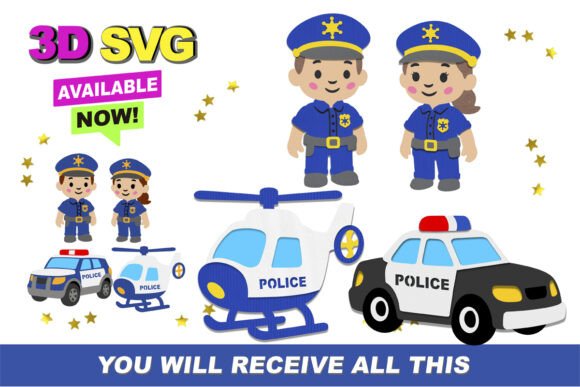
Police Officer Elements 3D SVG Graphics for Crafts
In the world of digital publishing, visual hierarchy is not just an aesthetic choice; it is a functional necessity. As a blog designer and digital publisher who has spent years refining editorial layouts and optimizing content for engagement, I approach every new graphic design asset with a critical eye. We are looking for more than just pretty pictures; we need tools that support content marketing, enhance reader trust, and drive clicks without cluttering the user experience.
Recently, I evaluated a specific set of assets titled "Police Officer Elements 3D SVG." At first glance, this might seem like a niche product intended solely for physical crafting. However, when viewed through the lens of modern web design and editorial design, these files offer unique opportunities for specific content niches. This review explores how this digital download can be integrated into real publishing workflows, from affiliate marketing pages to downloadable lead magnets.
The Editorial Mood and First Impressions
When you open a folder containing 3D-style vector graphics, the immediate question is always: does this feel authentic or artificial? The "Police Officer Elements 3D SVG" collection strikes a balance between playful and professional. The 3D effect adds depth, which helps these images stand out in crowded social media feeds and Pinterest grids. For a content creator, this depth translates to a stronger first impression.
The visual mood leans towards a clean, modern aesthetic with a touch of boldness. It is not overly decorative or feminine, nor is it strictly corporate. Instead, it feels accessible and engaging. This makes it particularly suitable for niches such as public safety education, community building, law enforcement appreciation blogs, or even fictional storytelling platforms. If your website relies on clear visual identity and consistent branding, these elements provide a cohesive theme that readers can quickly recognize.
Unlike flat icons that can disappear on mobile screens, the 3D rendering ensures that the subject matter remains the focal point. This is crucial for web design where attention spans are short. The asset supports a narrative of authority mixed with approachability, which is a powerful combination for building reader loyalty in specialized communities.
Integrating Assets into Real Publishing Workflows
One of the most valuable aspects of receiving this product is the format. The description notes that the download includes SVG in a zipped folder. For any serious publisher, SVG (Scalable Vector Graphics) is the gold standard. Unlike PNGs or JPGs, SVGs remain crisp at any size, ensuring that your blog graphics look sharp on high-resolution retina displays and large desktop monitors alike.
Furthermore, the note that this 3D SVG collection is easy to cut on your silhouette studio and Cricut design space software highlights its versatility. While this suggests a use case for physical crafts, it also indicates that the vectors are clean, well-structured, and layer-friendly. For a digital publisher, this means you can easily edit colors, combine shapes, and integrate these elements into larger compositions using tools like Adobe Illustrator or even Canva.
Here is how I would strategically place these assets across a typical content ecosystem:
- Pinterest Pins: The 3D aspect creates natural shadows and depth, making pins pop against white or light backgrounds. Use these elements as overlays on text-heavy pins to draw the eye to the headline.
- Newsletter Headers: Incorporate police officer-themed accents into email banners. This helps establish context immediately for subscribers interested in public safety news or resources.
- Digital Guides and eBooks: If you are creating a lead magnet such as a "Community Safety Checklist," these elements serve as excellent chapter dividers or cover art, enhancing the perceived value of the digital product.
- Affiliate Content Visuals: For bloggers promoting gear, books, or courses related to law enforcement, these graphics provide a thematic backdrop that reinforces the topic without distracting from the call-to-action buttons.
Enhancing Performance Through Visual Hierarchy
Good editorial design guides the reader’s eye. By using the Police Officer Elements 3D SVG, you can create a clearer visual hierarchy. When a visitor lands on your site, they should instantly understand the topic. A well-placed 3D graphic acts as a visual anchor.
This asset supports better click-through potential by breaking up text blocks. In long-form articles, visual breaks reduce cognitive load. When used as category thumbnails or article headers, these elements contribute to a more professional-looking content page. They signal that the site is curated and designed with care, which indirectly boosts reader trust. In the age of AI-generated content, human-curated, high-quality design assets help differentiate your brand.
Additionally, these graphics support brand identity consistency. If your site uses a specific color palette, the vector nature of the SVG allows you to recolor the elements to match your brand guidelines perfectly. This flexibility is essential for maintaining a cohesive look across all social media graphics and website pages.
Strategic Placement and Best Practices
While these assets are versatile, they must be used with intention. Not every image belongs everywhere. Here is where the Police Officer Elements 3D SVG works best:
- Hero Images: Use them prominently at the top of landing pages to set the tone.
- Article Thumbnails: Ensure they are distinct enough to be recognizable when scaled down.
- Editorial Accents: Use smaller elements as bullet points or section dividers.
- Social Media Previews: Leverage their 3D appeal for Instagram posts or Facebook shares.
However, there are areas where caution is required. Avoid using these in small mobile thumbnails if the details are intricate; they may become muddy. Do not place them on busy layouts or low-contrast backgrounds, as this will ruin readability. Furthermore, consider your niche carefully. If you are running a strict corporate finance blog, these playful 3D elements might clash with the desired minimal visual system. They are best suited for niches that allow for a bit of personality and thematic decoration.
Practical Publisher Notes for Implementation
Before integrating these assets into your live site, I recommend a rigorous testing phase. As a publisher, performance and compliance are non-negotiable.
First, test the graphics on both desktop and mobile screens. Check how they render as thumbnails. Preview them inside a real blog layout to ensure they do not disrupt the flow of text. Test them with various headline fonts—try pairing them with serif fonts for a traditional look, sans-serif fonts for modernity, or script fonts for a softer touch.
Readability is paramount. Check contrast ratios to ensure accessibility standards are met. Try converting the graphics to black and white to see if they still hold their structural integrity. Review the file size; while SVGs are generally lightweight, complex 3D effects can sometimes bloat the code. Compress images properly and optimize them for web performance to maintain fast load times.
Finally, confirm your commercial licensing. Even though the source mentions cutting machines, verify that you have the right to use these design assets on monetized websites, affiliate pages, or paid content products. Understanding the commercial license protects your business and ensures ethical use of creative design work.
In conclusion, the Police Officer Elements 3D SVG is more than just a craft file. It is a flexible graphic design asset that can elevate the editorial quality of your content. By using it thoughtfully, you can create a polished, trustworthy, and visually engaging experience for your audience. Whether you are designing a Canva template for a newsletter or updating your website header, these elements offer a reliable way to communicate your message with clarity and style.