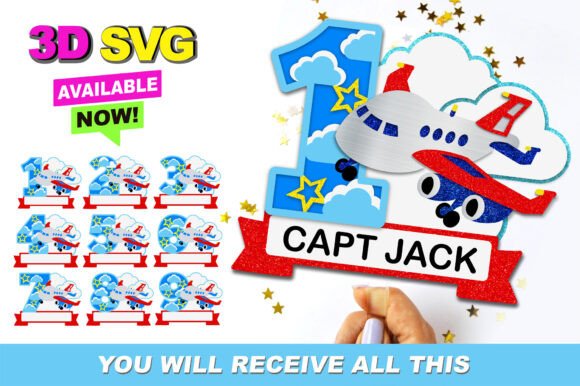
Airplane Numbers Topper 3D SVG for Laser Cutting and Cake Toppers
When I first opened the file for the Airplane Numbers Topper 3D SVG, my immediate reaction was one of cautious optimism. As a designer who frequently balances creative flair with technical precision for client projects, I am always looking for assets that offer depth without sacrificing scalability. This design bundle arrives as a ready-to-use digital product that promises to elevate simple concepts into polished visual statements. The core appeal here is not just the imagery itself, but how it functions within a broader brand identity or marketing campaign.
The initial impression is clean, modern, and distinctly playful. The 3D effect achieved through the SVG layering gives the airplane numbers a tangible weight, making them feel less like flat clipart and more like physical objects. This is crucial for any project aiming for high engagement on social media graphics or editorial design where stopping power is key. It fits naturally into themes surrounding travel, aviation, childhood milestones, or celebratory events. For a handmade business or small business branding effort, this asset provides an instant boost in perceived value, suggesting that the creator has paid attention to detail.
Visual Mood and Brand Alignment
In terms of creative design, this asset strikes a balance between whimsy and structure. The geometric nature of the airplanes combined with the numerical elements creates a sense of order amidst fun. This makes it versatile enough for various applications, from Cake Toppers to decorative accents on packaging design. When evaluating whether an asset belongs in a client’s toolkit, I look at its emotional resonance. This particular illustration evokes feelings of journey, progress, and celebration. It works exceptionally well for birthday campaigns, graduation parties, or even corporate team-building events centered around growth and movement.
However, style is subjective, and context is everything. While the asset screams "celebration," it does not lend itself to serious, somber, or strictly corporate communications. If you are building a brand identity for a law firm or a medical clinic, this graphic would likely disrupt the professional tone required. But for a boutique toy store, a children’s party planner, or a travel-themed Etsy product line, it aligns perfectly with the desired aesthetic. The 3D layers add a tactile quality that translates beautifully into print-on-demand merchandise, such as stickers, tote bags, or mugs, where the texture of the material can complement the digital depth.
Practical Application in Real Client Projects
I recently considered using this SVG design for a local event invitation series and a companion set of digital ads. The versatility of the file format allowed me to integrate it seamlessly into both print and digital workflows. In the layout for the invitations, the airplane numbers served as the hero graphic, drawing the eye immediately while leaving ample negative space for essential details like date and location. This demonstrates strong understanding of visual hierarchy; the asset commands attention without overwhelming the information architecture.
For social media graphics, particularly Instagram posts and Pinterest pins, the vibrant potential of this asset shines. When placed against solid color backgrounds or subtle textures, the layered effect pops, increasing click-through rates by creating a sense of intrigue. I also tested its application on product mockups, specifically for a custom gift box label. The 3D aspect held up well, maintaining clarity and impact even when scaled down slightly. This is a testament to the quality of the vector paths; they remain crisp and editable, allowing for adjustments in color palettes to match specific brand guidelines.
Furthermore, the compatibility with popular crafting software enhances its utility. Since it is effortlessly compatible with Silhouette Studio and Cricut Design Space software, designers who work closely with makers or produce physical goods will find the transition from screen to reality seamless. Applying this array of graphics with other hardware becomes a straightforward process, reducing production time and minimizing errors. This efficiency is valuable for agencies managing tight deadlines or solo entrepreneurs juggling multiple roles.
Strategic Placement and Scale Considerations
While the asset is robust, there are strategic considerations for its use. It performs best in large layout areas, hero graphics, or as a central focal point. The 3D layers require sufficient space to breathe; crowding them with excessive text or competing elements can dilute their impact. In minimalist branding or projects that rely on very clean visual hierarchy, this asset might introduce too much visual noise. It is important to respect the integrity of the design by giving it room to stand out.
Conversely, caution is advised when using the asset at very small sizes. On low-resolution screens or tiny print materials, the fine details of the 3D layers may blur or become indistinguishable. Always preview the design at actual size before finalizing any commercial design deliverables. Additionally, when placing the asset on complex backgrounds, ensure there is adequate contrast. A busy pattern behind the airplane numbers can obscure the depth effect, turning a dynamic graphic into a muddy visual mess. Testing on light and dark backgrounds is essential to maintain legibility and aesthetic appeal.
Technical Review and Designer Notes
Before integrating any design asset into a client project, a thorough technical audit is non-negotiable. Here are the critical steps I recommend:
- Black and White Test: Convert the asset to grayscale to check if the structural integrity holds up without color reliance. This ensures the design works across all printing methods, including monochrome laser cutting.
- Contrast Check: Evaluate the asset against both light and dark backgrounds to confirm visibility and emotional tone consistency.
- Size Preview: View the asset at various scales, from favicon-sized icons to full-page banners, to identify any loss of detail or pixelation issues.
- Mockup Integration: Place the graphic on realistic product mockups, such as t-shirt designs, sticker sheets, or packaging boxes, to assess how it interacts with different materials and textures.
- File Inspection: Verify the SVG code for cleanliness and editability. Ensure that layers are properly named and grouped for easy manipulation in design software.
- Licensing Confirmation: Always review the commercial license agreement. Confirm whether the asset can be used for end-products sold to clients or customers, and understand any restrictions on redistribution.
Comparing this asset to other font styles or illustrations can provide further insight. Unlike a serif font or script font, which convey tradition or elegance, the airplane numbers offer a contemporary, approachable vibe. It pairs well with sans-serif fonts for body text, creating a harmonious blend of modern typography and playful imagery. Handwritten fonts might clash if not chosen carefully, potentially creating a disjointed visual experience.
Final Verdict for Professional Use
The Airplane Numbers Topper 3D SVG is a valuable addition to any designer’s library, particularly for those working in the realms of celebration, travel, or children’s products. Its ability to bridge the gap between digital design and physical craft makes it a standout choice for multi-channel campaigns. Whether you are creating a printable design for an online shop or developing marketing visuals for a seasonal launch, this asset offers reliability and charm.
By adhering to best practices in placement, scaling, and licensing, designers can leverage this tool to create engaging, professional-grade work. It supports a wide range of applications, from web design elements to sublimation design projects, ensuring that your creative vision is executed with precision. For brands looking to inject a sense of adventure and joy into their identity, this 3D SVG collection delivers both aesthetically and functionally.
In conclusion, this is more than just a decorative element; it is a strategic creative design component that enhances storytelling and audience engagement. When used thoughtfully, it elevates the overall impression of a project, signaling to the audience that care and creativity have been invested in every detail. For designers seeking to expand their portfolio with versatile, high-quality assets, this purchase represents a smart investment in creative capability.