3D Father S Day Card Holder Laser Cut Review
When a client approaches me with a request for a Father’s Day campaign that needs to feel both premium and deeply personal, I immediately think about tactile experiences. In a digital-first world, the physical act of opening a card or holding a gift carries significant emotional weight. Recently, I evaluated a specific design asset titled 3D Father s Day Card Holder Laser Cut to determine if it could serve as a viable component in a commercial branding project for a handmade boutique. This review breaks down how this digital product performs under professional scrutiny, focusing on its utility for real-world applications ranging from packaging design to social media marketing.
First Impressions and Visual Mood
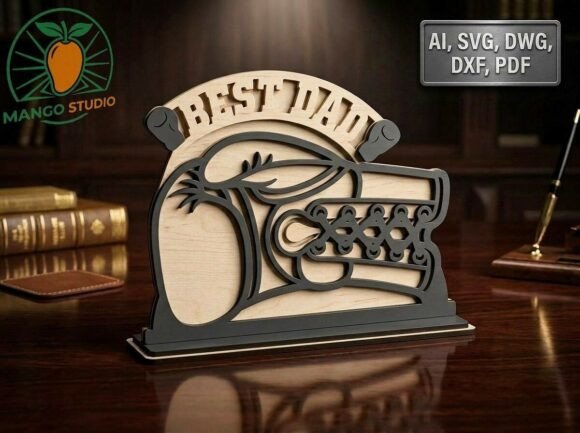
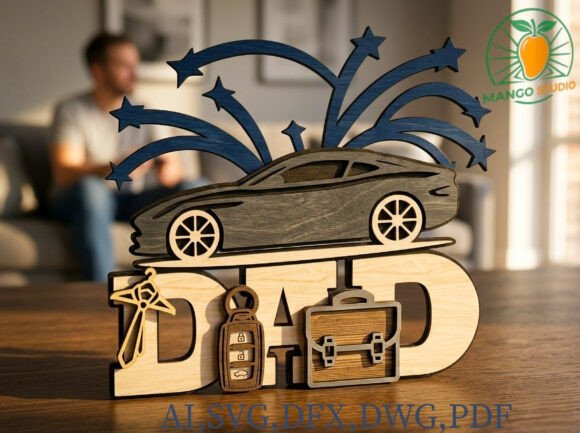
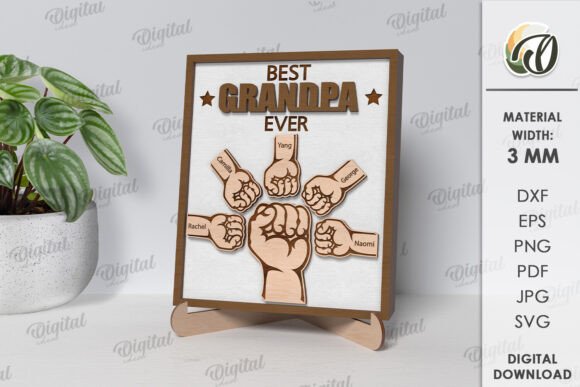
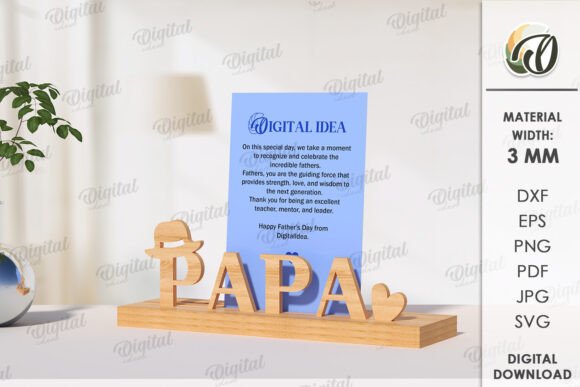
The immediate visual impact of the 3D Father s Day Card Holder Laser Cut is one of structured elegance. Unlike flat vector icons, this asset simulates depth and dimensionality, suggesting a layered construction typical of high-end laser-cut paper crafts. The mood it creates is nostalgic yet modern, evoking the craftsmanship associated with handmade businesses while maintaining the clean lines required for contemporary brand identity. It feels less like a generic clipart and more like a specialized illustration intended for thematic collections.
For a small business owner launching a seasonal line of greeting cards or gift boxes, this asset provides an instant anchor for the visual narrative. It signals quality and attention to detail before the customer even reads the copy. The design naturally fits projects that aim to elevate the perceived value of a product through visual storytelling. Whether used in editorial design for a blog post about “Thoughtful Gifts for Dad” or as a hero graphic for an email newsletter, it brings a sense of occasion and celebration to the layout.
Practical Application in Client Projects
In my workflow, versatility is key. A single graphic design asset must perform across multiple touchpoints. Here is how the 3D Father s Day Card Holder Laser Cut integrates into various stages of a design project:
- Packaging Design: The 3D effect translates exceptionally well when applied to mockups. Imagine this design printed on kraft paper or matte black cardstock for a luxury gift box. It serves as a decorative accent that guides the eye toward the product inside, enhancing unboxing experiences.
- Social Media Graphics: For Instagram posts and Pinterest pins, the distinct silhouette stands out against busy feeds. It works beautifully as a background element or a central focal point in carousel posts detailing Father’s Day sale items.
- Printable Designs: As a digital product, it allows for instant delivery to customers who wish to create their own cards. This supports print-on-demand models where users can download the file, print it at home, and assemble it, adding value to your Etsy product offerings.
- Merchandise and Sublimation: While primarily a paper craft aesthetic, the vector nature of such files often allows for adaptation onto t-shirts, mugs, or tote bags. However, designers must be cautious here; the intricate details of a laser-cut look may lose clarity when scaled too large on fabric textures.
Strategic Placement and Layout Considerations
Not every design element deserves prime real estate. The 3D Father s Day Card Holder Laser Cut shines in large layout areas and hero graphics where its structural details can breathe. It is ideal for supporting brand elements in themed collections, such as a cohesive set of holiday marketing visuals. When used as a decorative accent in packaging design, it adds texture without overwhelming the primary message.
However, there are critical areas where this asset requires careful handling. In minimalist branding projects that rely on heavy white space and strict geometric purity, the organic complexity of a laser-cut design might clash with the intended aesthetic. Similarly, in crowded layouts with dense typography, the intricate cutouts can become visually noisy, disrupting the visual hierarchy. Designers should avoid placing this asset over low-contrast backgrounds or complex photographic textures, as the fine lines will disappear, reducing legibility and professional polish.
Technical Evaluation and Designer Notes
Before integrating any commercial design asset into a client deliverable, rigorous technical checks are non-negotiable. The product description notes that this is a SVG design contained within a zip folder, which is a positive indicator for scalability. Yet, several steps must be taken to ensure quality:
- File Inspection: Open the SVG in your vector software to inspect the node structure. Ensure paths are closed and optimized. Check if the transparency is handled correctly if a PNG preview is included, though the vector source is preferred for crisp output.
- Contrast Testing: Preview the asset in black and white. Does the 3D effect hold up without color? Test it on both light and dark backgrounds to ensure sufficient contrast. If the shadows or highlights rely on subtle gradients, they may not reproduce well in single-color printing processes.
- Scalability Check: Resize the asset to very small dimensions, such as those used for favicon integration or tiny sticker designs. Intricate laser-cut patterns often turn into muddy blobs when scaled down below 1 inch. Determine the minimum viable size for your specific use case.
- Typography Pairing: Evaluate how the asset interacts with different font styles. A serif font might enhance the traditional, classic feel of the card holder, while a sans serif font could modernize it. Avoid pairing it with overly decorative script fonts or handwritten fonts unless you are aiming for a highly stylized, maximalist look.
- Licensing Verification: Confirm the commercial license terms explicitly. Since this is a creative marketplace item, ensure you have the right to use it in end-products sold to clients, whether that involves web design, marketing visuals, or physical goods.
Final Verdict for Professional Use
The 3D Father s Day Card Holder Laser Cut is a strong candidate for designers working in the handmade, lifestyle, and celebratory niches. It offers a sophisticated visual language that can elevate a simple greeting card concept into a branded experience. Its suitability depends largely on the context: it is perfect for campaigns emphasizing craftsmanship, nostalgia, and tangible gifts. It is less suitable for corporate communications or ultra-minimalist tech brands.
For small business branding and Etsy sellers, this asset provides a ready-made solution for creating cohesive seasonal content. It reduces the time spent designing from scratch while allowing for customization through color and composition. By treating it as a foundational illustration rather than a standalone logo, designers can leverage its strengths effectively. Ultimately, success lies in respecting the asset’s complexity, testing its performance across mediums, and ensuring it aligns with the overall brand identity and emotional goals of the project.